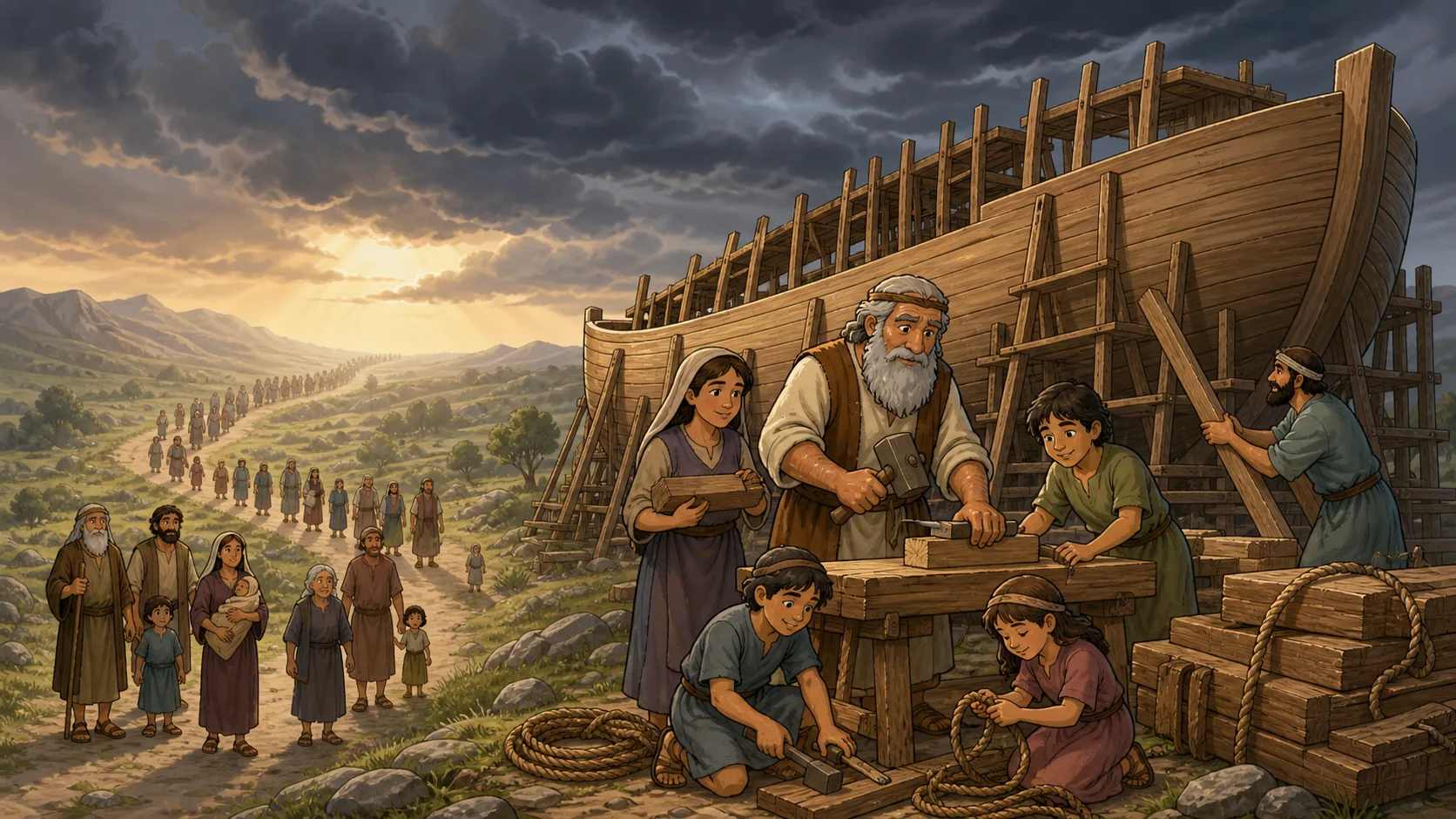
Primary passage: Genesis 5–6
Estimated time: 20–30 minutes
Suggested rhythm: Read Scripture 10–15 minutes; study the notes 5–7 minutes; answer the questions 5–8 minutes; pray for about 1 minute.
Study rule: Read the assigned Scripture before these notes. Scripture is the authority; summaries, connections, and applications below are study helps.
1. Read
Read Genesis 5–6. Notice the repeated ending of human lives, the unusual statement about Enoch, the growth of corruption, and the contrast between the world and Noah.
2. Plain-language summary
Genesis 5 traces Adam’s family line to Noah. The repeated deaths show that the warning of Genesis 2 has become human experience, though Enoch’s story interrupts the pattern with hope. Genesis 6 describes multiplying human wickedness and violence. God is grieved and announces judgment by flood. Noah receives favor, is called righteous in his generation, walks with God, and obeys detailed instructions to build an ark for his household and living creatures.
3. What does this show about God?
- God remembers generations and individuals; human lives are not meaningless.
- Evil and violence grieve God.
- God judges a corrupt world rather than ignoring oppression forever.
- God gives grace and a means of rescue.
- God reveals what Noah must do, and Noah responds in obedience.
4. Command, promise, warning, covenant
| Category | Observation | Reference |
|---|---|---|
| Command | Noah must build the ark, gather food, and bring his household and creatures aboard as God directs. | Genesis 6:14–21 |
| Promise | God promises to preserve Noah’s household and living creatures through the ark. | Genesis 6:18–20 |
| Warning | Persistent corruption and violence bring divine judgment. | Genesis 6:5–7, 11–13 |
| Covenant | God says he will establish his covenant with Noah; its terms are unfolded after the flood. | Genesis 6:18; 9:8–17 |
5. Difficult-text note
The identity of the “sons of God,” the “daughters of man,” and the Nephilim in Genesis 6:1–4 is disputed. The Nephilim are mysterious people or warriors mentioned in the passage. Major interpretations of the “sons of God” include heavenly beings, powerful rulers, or lines of human descent. The passage does not tell us enough to be completely certain. Its clear movement is toward the conclusion that human wickedness and violence filled the earth.
6. Connect to Christ and the New Testament
- Explicit New Testament connection: Hebrews 11:7 presents Noah as acting by faith in response to God’s warning.
- Explicit New Testament connection: Jesus uses the days of Noah to warn people to remain ready for coming judgment (Matthew 24:37–39).
- Explicit but difficult connection: First Peter 3:20–21 compares rescue through water with baptism. Peter says baptism is not the removal of dirt from the body but an appeal to God—or, in another major translation, a pledge toward God—concerning a good conscience, through the resurrection of Jesus Christ.
7. Vocabulary
- Genealogy: A record of family descent.
- Corruption: Moral ruin that twists what should be good.
- Violence: Harmful force against another person or creature.
- Favor/grace: Kindness freely shown by God.
- Ark: The large vessel God commanded Noah to build for preservation through the flood.
8. Think and respond
- What phrase repeatedly closes the entries in Genesis 5? How is Enoch’s account different (Genesis 5:21–24)?
- According to Genesis 6:11–13, how are corruption and violence used to describe the earth?
- What action in Genesis 6:22 shows Noah’s faith?
9. Prayer
Righteous and merciful God, keep us from becoming comfortable with violence and corruption. Give us faith that hears your warning, receives your grace, and obeys your word. Through Christ our Lord, amen.